Web design is no longer just about creating attractive websites. It has become a critical business strategy that directly impacts user trust, engagement, and conversion rates. In today’s competitive digital environment, a website often forms the first impression of a brand, and that impression is formed within seconds.
Thank you for reading this post, don't forget to subscribe!At ByteBrew Technologies, we continuously analyze global design evolution to help businesses build modern, scalable, and high-performing digital experiences.
This blog explores the most powerful web design trends dominating this year and how businesses can use them to stay ahead of the competition.
- Minimalist and Purpose-Driven Design
Minimalism continues to lead modern web design because users now prefer clarity over complexity.
Why Minimalism Works
Modern users do not want overloaded pages. They want:
- Clear messaging
- Fast navigation
- Clean layouts
- Instant understanding of services
Key Elements of Minimal Design
- Simple color palettes
- Strong visual hierarchy
- Plenty of white space
- Focused content blocks
Business Impact
Minimal design increases:
- Conversion rates
- User engagement
- Brand trust
- Page loading speed
For businesses, simplicity is no longer optional—it is a conversion strategy.
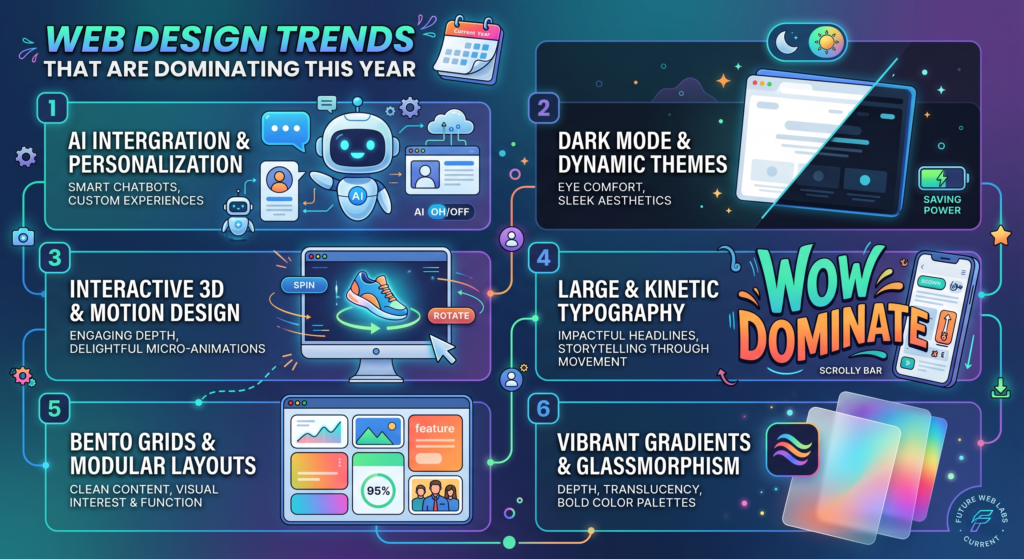
- AI-Integrated Web Experiences
Artificial Intelligence is reshaping how websites function and interact with users.
How AI is Used in Modern Web Design
- Personalized content recommendations
- Smart chatbots for 24/7 support
- Predictive search suggestions
- Behavioral UI adjustments
Why It Matters
AI allows websites to act like intelligent systems rather than static pages.
This results in:
- Better user experience
- Higher engagement
- Increased sales conversions
- Reduced support workload
At ByteBrew Technologies, AI integration is becoming a core part of modern digital solutions.
- Mobile-First and Responsive Design
Mobile usage dominates internet traffic worldwide, making mobile-first design essential.
What Mobile-First Means
Instead of designing for desktop first, developers now:
- Start with mobile layout
- Optimize for smaller screens
- Scale up for desktop
Key Benefits
- Better Google rankings (SEO advantage)
- Faster load times
- Improved usability
- Lower bounce rates
A non-mobile-optimized website today is equivalent to a closed business door.
- Dark Mode User Interfaces
Dark mode is now a standard feature in modern web design.
Advantages of Dark Mode
- Reduces eye strain
- Improves readability in low light
- Enhances visual contrast
- Gives a premium feel
Where It Works Best
- SaaS platforms
- Tech websites
- Dashboards
- Creative portfolios
Users now expect the ability to switch themes based on preference.
- Micro-Interactions and Animation Design
Modern websites feel alive because of micro-interactions.
Examples of Micro-Interactions
- Button hover effects
- Smooth scrolling animations
- Loading indicators
- Icon transitions
Why They Matter
Micro-interactions:
- Guide user behavior
- Provide instant feedback
- Improve engagement
- Make UI more intuitive
A well-designed animation can significantly enhance user satisfaction.
- 3D Visual Elements and Immersive Design
3D design is becoming a major trend in modern web experiences.
Applications of 3D in Web Design
- Product visualization
- Interactive landing pages
- Hero section animations
- Branding visuals
Benefits
- Strong visual impact
- Higher engagement time
- Better storytelling
- Premium brand perception
However, performance optimization is critical to ensure speed is not compromised.
- Advanced Typography Trends
Typography is now a core visual identity element.
Modern Typography Trends
- Bold oversized fonts
- Variable font systems
- Creative font pairing
- Animated text effects
Why Typography Matters
Typography influences:
- Brand personality
- Emotional connection
- Readability
- Conversion behavior
A strong typography system can replace heavy graphics in many modern designs.
- Glassmorphism and Futuristic UI Styles
Glassmorphism is widely used in modern UI design systems.
Characteristics
- Frosted glass effect
- Soft shadows
- Layered interface design
- Transparency effects
Why It’s Popular
It creates a futuristic, clean, and premium appearance often used in:
- Dashboards
- SaaS applications
- Admin panels
This trend is especially popular in tech-driven industries.
- Speed Optimization and Lightweight Design
Website performance is now a ranking factor and user expectation.
Key Optimization Techniques
- Image compression
- Clean code structure
- Lazy loading
- CDN integration
Why Speed Matters
- Improves SEO ranking
- Reduces bounce rate
- Enhances user satisfaction
- Increases conversion rates
A slow website directly means lost business opportunities.
- Voice Search Optimization
With smart devices becoming common, voice search is growing rapidly.
How Web Design Supports Voice Search
- Conversational content structure
- FAQ-based pages
- Natural keyword usage
- Fast-loading pages
Business Advantage
Websites optimized for voice search are more likely to:
- Appear in featured snippets
- Capture mobile traffic
- Improve accessibility
- Scroll-Based Storytelling
Scrolling is now used as a storytelling mechanism.
Modern Scrolling Techniques
- Parallax scrolling
- Section-based transitions
- Horizontal scroll layouts
- Animated scroll triggers
Benefits
- Higher engagement time
- Better storytelling flow
- Improved user experience
This technique helps brands communicate complex ideas visually.
- Personalization in Web Design
Modern users expect personalized experiences.
Examples of Personalization
- Location-based content
- User-specific dashboards
- Behavioral recommendations
- Returning user customization
Why It Works
Personalization increases:
- Customer satisfaction
- Engagement rates
- Sales conversions
Generic websites are becoming outdated.
- Security-Driven Design Approach
Security is now a fundamental part of web design strategy.
Essential Security Features
- SSL encryption
- Secure authentication
- Data protection compliance
- Safe payment integration
Why It Matters
Users only trust websites that feel secure. Without trust, there is no conversion.
- No-Code and Low-Code Integration
No-code platforms are changing the development landscape.
Benefits
- Faster deployment
- Lower development costs
- Easy maintenance
- Rapid prototyping
However, businesses still require custom solutions for scalability, which is where expert teams like ByteBrew Technologies play a critical role.
Conclusion
Web design is evolving into a powerful combination of technology, psychology, and creativity. Businesses that adopt modern design trends gain a strong competitive advantage in digital markets.
From AI-powered experiences to minimalist design, mobile-first development, and immersive interfaces, each trend plays a vital role in shaping user expectations.
At ByteBrew Technologies, we help businesses transform outdated websites into modern digital experiences that attract, engage, and convert.
If your business is planning a redesign or new website development, now is the perfect time to adopt these trends and stay ahead of the competition.