
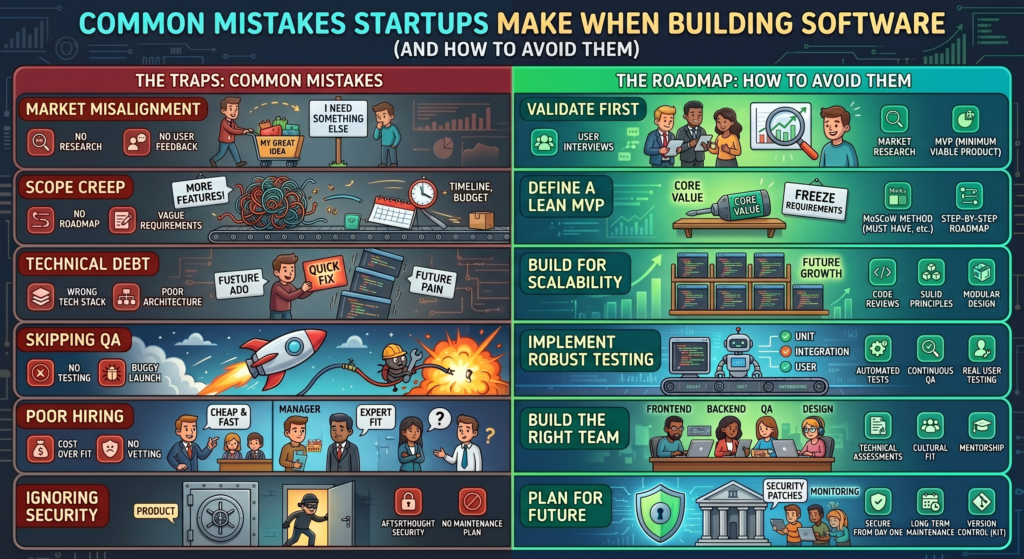
In today’s fast-paced digital world, startups are under immense pressure to launch quickly, scale rapidly, and stay ahead of competitors. While software plays a critical role in achieving these goals, many startups fail—not because of a lack of ideas, but due to avoidable mistakes during software development.
Thank you for reading this post, don't forget to subscribe!Building software is not just about coding. It’s about strategy, planning, execution, and continuous improvement. According to industry experience, startups that fail to align their software with business goals often struggle to survive in the long run.
At ByteBrew Technologies, startups are empowered with tailored software solutions that drive efficiency, innovation, and growth through modern technologies and expert development practices.
In this comprehensive guide, we’ll explore the most common mistakes startups make when building software—and how to avoid them effectively.
1. Lack of Clear Product Vision
The Mistake
Many startups jump straight into development without defining a clear vision for their product. This leads to confusion, scope creep, and wasted resources.
Without a defined roadmap:
- Teams build unnecessary features
- Development timelines increase
- Costs spiral out of control
How to Avoid It
Start with a clear product strategy:
- Define your target audience
- Identify the problem you’re solving
- Outline core features (not everything at once)
Working with experts through ByteBrew Technologies ensures proper planning and strategic alignment before development begins.
2. Skipping Market Research
The Mistake
Startups often assume they know what users want. This assumption can be dangerous.
Building a product without validation can result in:
- Low user adoption
- Poor engagement
- Product failure
How to Avoid It
Conduct:
- Market analysis
- Competitor research
- User interviews
Validate your idea before investing heavily in development.
3. Overbuilding Instead of Starting with an MVP
The Mistake
Startups try to build a fully-featured product from day one, which leads to delays and unnecessary complexity.
How to Avoid It
Focus on building a Minimum Viable Product (MVP):
- Launch quickly
- Gather user feedback
- Iterate based on real data
A structured development process—like the one used in professional software workflows (analysis → design → development → testing → deployment)—helps ensure efficient execution.
4. Poor Technology Choices
The Mistake
Choosing the wrong tech stack can lead to scalability issues and increased maintenance costs.
How to Avoid It
Select technologies based on:
- Scalability
- Performance
- Long-term maintenance
Modern development teams (like those at ByteBrew Technologies Services) use technologies such as React, Node.js, cloud platforms, and AI tools to build scalable systems.
5. Ignoring UI/UX Design
The Mistake
Many startups focus heavily on functionality but ignore user experience.
Result:
- Users leave quickly
- Poor retention rates
- Negative reviews
How to Avoid It
Invest in:
- User research
- Wireframes and prototypes
- Clean, intuitive design
A user-centered design approach ensures your product is not only functional but enjoyable to use.
6. Lack of Scalability Planning
The Mistake
Startups often build software for current needs without considering future growth.
How to Avoid It
Build scalable systems by:
- Using cloud-based infrastructure
- Designing modular architecture
- Planning for increased traffic and users
Scalable software solutions ensure your product grows with your business.
7. Not Prioritizing Security
The Mistake
Security is often treated as an afterthought.
This can lead to:
- Data breaches
- Legal issues
- Loss of customer trust
How to Avoid It
Follow best practices:
- Secure coding standards
- Data encryption
- Regular security audits
Professional software teams prioritize security at every stage of development.
8. Poor Communication Between Teams
The Mistake
Miscommunication between developers, designers, and stakeholders leads to delays and errors.
How to Avoid It
- Use agile methodologies
- Maintain regular updates
- Ensure clear documentation
Collaboration is key to successful software development.
9. Ignoring Testing and Quality Assurance
The Mistake
Skipping proper testing leads to bugs, crashes, and poor user experience.
How to Avoid It
Implement:
- Automated testing
- Manual QA
- Continuous testing cycles
Testing ensures your software meets user expectations before launch.
10. Underestimating Development Time & Cost
The Mistake
Startups often underestimate the resources required for software development.
How to Avoid It
- Plan realistic timelines
- Allocate sufficient budget
- Include buffer time for unexpected challenges
Working with experienced teams helps avoid costly miscalculations.
11. No Post-Launch Strategy
The Mistake
Many startups think development ends after launch.
How to Avoid It
Post-launch is just the beginning:
- Monitor performance
- Gather feedback
- Release updates
Software must evolve continuously to stay relevant.
12. Building Without Expert Guidance
The Mistake
Trying to handle everything in-house without expertise can lead to failure.
How to Avoid It
Partner with a professional software development company.
At ByteBrew Technologies, startups benefit from:
- Proven development processes
- Experienced engineers
- Scalable solutions
- Successful project delivery
13. Ignoring Automation Opportunities
The Mistake
Manual processes slow down operations and increase errors.
How to Avoid It
Leverage:
- AI automation
- Workflow automation tools
- Smart integrations
Automation improves efficiency and reduces operational costs.
14. Not Aligning Software with Business Goals
The Mistake
Building software without aligning it with business objectives leads to wasted effort.
How to Avoid It
Ensure your software:
- Solves real business problems
- Supports revenue growth
- Improves operational efficiency
Custom solutions tailored to your needs deliver better results.
15. Failing to Learn from Real-World Examples
The Mistake
Startups often ignore case studies and proven solutions.
How to Avoid It
Explore real-world projects like those showcased in the ByteBrew Technologies Portfolio to understand what works and what doesn’t.
16. Not Leveraging Ready-Made Solutions
The Mistake
Building everything from scratch when ready-made solutions exist.
How to Avoid It
Use pre-built or customizable products when appropriate.
Explore innovative solutions at ByteBrew Technologies Products to save time and cost.
Why Choosing the Right Development Partner Matters
The difference between success and failure often comes down to execution.
A professional software development partner provides:
- Strategic planning
- Technical expertise
- Scalable architecture
- Continuous support
At ByteBrew Technologies, businesses are empowered with innovative solutions that streamline operations, enhance customer experience, and drive growth.
Final Thoughts
Building software is one of the most critical steps for any startup. While the journey is challenging, avoiding these common mistakes can significantly increase your chances of success.
Key Takeaways:
- Start with a clear vision
- Build an MVP first
- Focus on scalability and security
- Invest in UI/UX
- Work with experienced professionals
By making smarter decisions early on, startups can save time, reduce costs, and build products that truly succeed in the market.
Ready to Build Your Software the Right Way?
If you’re planning to develop a scalable, high-performance software solution, don’t leave it to chance.
👉 Get in touch with experts at
ByteBrew Technologies and turn your idea into a powerful digital product.