
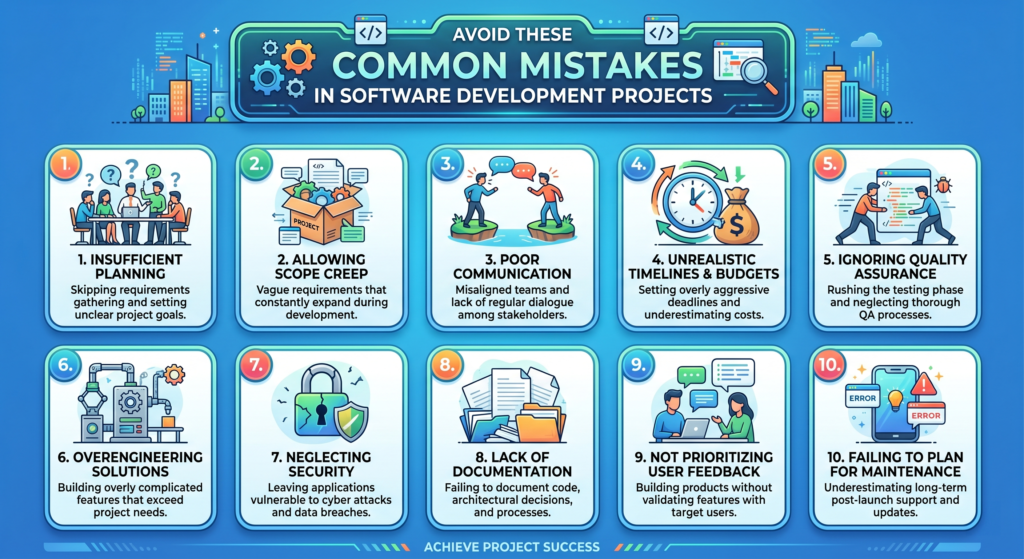
Introduction
Thank you for reading this post, don't forget to subscribe!In today’s digital era, businesses rely heavily on software solutions to streamline operations, enhance customer experience, and stay competitive. From startups building SaaS platforms to enterprises investing in custom applications, software development plays a critical role in success.
However, despite the increasing demand for software, many projects fail due to avoidable mistakes. These errors not only waste time and money but also impact business growth and reputation.
In this SEO-optimized guide, we’ll explore the most common software development mistakes and provide actionable strategies to avoid them.
- Lack of Clear Requirements
One of the most common software development mistakes is unclear or incomplete requirements.
Without a well-defined scope, developers may build features that don’t align with business goals.
✔️ How to Avoid:
- Create a detailed requirement document
- Use wireframes and prototypes
- Align stakeholders before development
- Poor Project Planning
Skipping the planning phase leads to confusion, delays, and inefficiencies.
✔️ How to Avoid:
- Define milestones and timelines
- Use Agile or Scrum methodologies
- Break the project into manageable sprints
- Choosing the Wrong Technology Stack
Using the wrong tools and technologies can limit your software’s scalability and performance.
✔️ How to Avoid:
- Choose tech based on project requirements
- Consider scalability and future growth
- Consult experienced developers
- Ineffective Communication
Poor communication between teams often results in misunderstandings and delays.
✔️ How to Avoid:
- Conduct regular meetings
- Use collaboration tools
- Maintain transparency
- Ignoring Testing and Quality Assurance
Skipping testing is a major reason behind software project failures.
✔️ How to Avoid:
- Perform unit, integration, and system testing
- Automate testing processes
- Allocate time for QA
- Underestimating Time and Budget
Many projects fail because of unrealistic expectations.
✔️ How to Avoid:
- Use realistic estimations
- Add buffer time
- Track progress regularly
- Poor User Experience (UX/UI)
A complex or confusing interface can drive users away, even if the software works perfectly.
✔️ How to Avoid:
- Focus on user-centered design
- Conduct usability testing
- Keep UI simple and intuitive
- Lack of Scalability
Building software only for current needs can limit future growth.
✔️ How to Avoid:
- Use scalable architecture
- Optimize databases
- Plan for increased traffic
- Ignoring Security Best Practices
Security vulnerabilities can lead to data breaches and legal issues.
✔️ How to Avoid:
- Implement secure coding practices
- Use encryption and authentication
- Perform regular security audits
- No Post-Launch Support
Launching software is just the beginning. Without maintenance, software becomes outdated.
✔️ How to Avoid:
- Plan regular updates
- Monitor performance
- Provide technical support
Bonus: Not Starting with an MVP
Many businesses try to build a complete product from the start, increasing risk.
✔️ Solution:
Start with a Minimum Viable Product (MVP) to test your idea and improve based on feedback.
Best Practices for Successful Software Development
To avoid these common software development problems, follow these proven strategies:
- ✔️ Adopt Agile methodology
- ✔️ Focus on collaboration
- ✔️ Prioritize quality assurance
- ✔️ Keep users at the center
- ✔️ Work with experienced software professionals
Conclusion
Avoiding these software development mistakes can significantly improve your project’s success rate. Proper planning, clear communication, and a focus on quality are key to building scalable and reliable software.
Whether you’re developing a SaaS platform, a mobile app, or custom enterprise software, following these best practices will help you deliver better results.
Looking to build high-quality, scalable software?
ByteBrew Technologies specializes in:
- Custom Software Development
- SaaS & MVP Development
- Web & Mobile Applications
👉 Contact us today to turn your idea into a successful digital product.