Introduction
Small and medium-sized businesses (SMBs) are the backbone of the global economy. They create employment opportunities, support innovation, and drive economic growth in almost every industry. However, the modern business environment is rapidly evolving due to digital transformation.
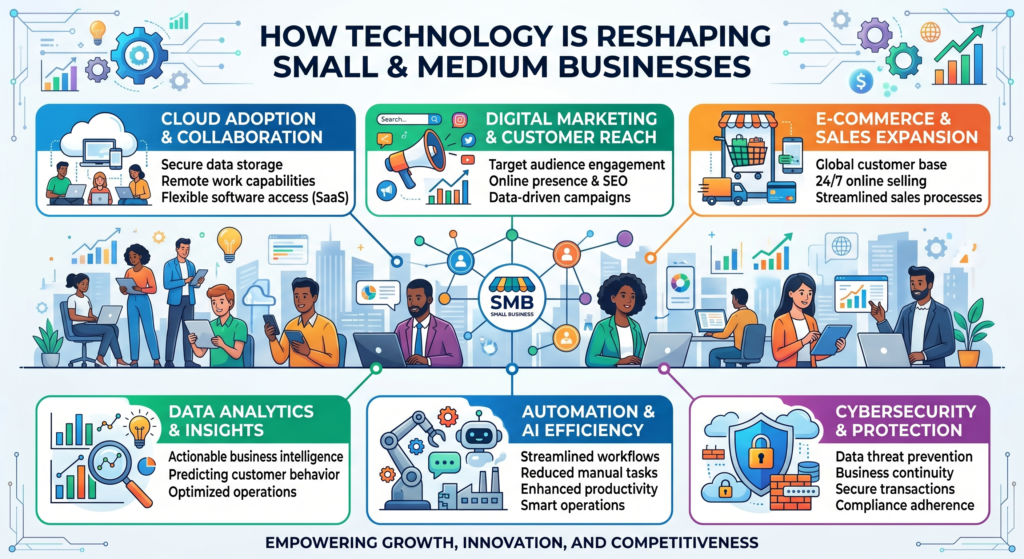
Thank you for reading this post, don't forget to subscribe!Technology is no longer optional—it has become a necessity for survival and growth. From cloud computing and artificial intelligence to automation and digital marketing, technology is reshaping how SMBs operate, compete, and scale.
In this article, we will explore how technology is reshaping small and medium businesses, the key areas of transformation, and how businesses can leverage digital tools to stay competitive in 2026 and beyond.
1. Digital Transformation of Small and Medium Businesses
Traditional business models relied heavily on physical operations, manual processes, and local customer bases. Growth was often slow and limited by resources.
Today, technology has completely changed this landscape.
Modern SMBs are:
- Moving from offline to online operations
- Automating repetitive tasks
- Using digital platforms for marketing and sales
- Expanding to global markets
- Leveraging cloud-based systems
This shift has leveled the playing field, allowing small businesses to compete with large enterprises using the right digital strategies.
2. Cloud Computing: The Foundation of Modern SMBs
Cloud computing has become one of the most important technologies for small and medium businesses.
Instead of investing in expensive physical servers, businesses now use cloud-based platforms for storage, applications, and operations.
Benefits of cloud computing:
- Lower IT infrastructure costs
- Easy scalability as business grows
- Remote access to systems and data
- Enhanced security and backup
- Faster deployment of applications
Cloud solutions allow SMBs to operate efficiently without requiring large technical teams or infrastructure investments.
3. Automation: Boosting Efficiency and Productivity
Automation is helping SMBs save time, reduce costs, and improve accuracy.
Common uses of automation:
- Email marketing automation
- Customer support chatbots
- Invoice and billing systems
- Social media scheduling
- Data entry and reporting
By automating repetitive tasks, businesses can focus on strategy, innovation, and customer experience.
This leads to higher productivity and better overall performance.
4. Digital Marketing: Driving Business Growth
Digital marketing has replaced traditional marketing as the primary growth driver for SMBs.
Key digital marketing channels include:
- Search Engine Optimization (SEO)
- Social Media Marketing
- Google Ads and Paid Campaigns
- Email Marketing
- Content Marketing
Benefits of digital marketing:
- Precise audience targeting
- Real-time performance tracking
- Higher return on investment (ROI)
- Cost-effective advertising
- Global reach
Even small businesses can now compete with larger brands using smart digital marketing strategies.
5. E-Commerce: Expanding Business Opportunities
E-commerce has transformed how SMBs sell products and services.
Businesses no longer need physical stores to operate successfully.
Advantages of e-commerce:
- 24/7 online availability
- Global customer reach
- Reduced operational costs
- Easy product management
- Direct customer engagement
Platforms like Shopify and WooCommerce allow businesses to launch online stores quickly and efficiently.
6. Customer Relationship Management (CRM)
CRM systems help SMBs manage customer interactions more effectively.
CRM benefits:
- Centralized customer data
- Sales tracking and pipeline management
- Automated follow-ups
- Improved customer service
- Personalized communication
A strong CRM system helps businesses improve customer satisfaction and increase long-term loyalty.
7. Artificial Intelligence (AI): Smarter Business Decisions
Artificial Intelligence is changing how SMBs analyze data and make decisions.
AI applications:
- Customer behavior prediction
- Chatbots for customer support
- Sales forecasting
- Personalized marketing
- Inventory management
AI helps businesses make data-driven decisions instead of relying on guesswork.
8. Remote Work and Collaboration Tools
Remote work has become a permanent part of modern business operations.
Collaboration tools include:
- Video conferencing platforms
- Project management tools
- Cloud file sharing systems
- Team communication apps
These tools allow businesses to hire global talent and improve productivity while reducing office costs.
9. Cybersecurity: Protecting Business Data
As businesses become more digital, cybersecurity becomes essential.
Key cybersecurity practices:
- Strong password management
- Multi-factor authentication
- Secure cloud storage
- Regular backups
- Employee training
A single security breach can damage trust and cause financial losses, making cybersecurity a top priority for SMBs.
10. Data Analytics: Turning Data into Insights
Data analytics helps SMBs make smarter decisions.
Benefits:
- Understanding customer behavior
- Improving marketing strategies
- Identifying sales trends
- Reducing costs
- Increasing efficiency
Data-driven businesses are more likely to grow faster and stay competitive.
11. Mobile Technology: Business in Every Pocket
Mobile technology allows businesses to stay connected anytime, anywhere.
Mobile benefits:
- Mobile-friendly websites
- Business apps
- Mobile payment systems
- Real-time operations
With most users browsing on mobile devices, mobile optimization is essential for SMB success.
12. Challenges SMBs Face in Technology Adoption
Despite the benefits, SMBs face several challenges:
- Limited budgets
- Lack of technical knowledge
- Security concerns
- Resistance to change
- Choosing the right tools
However, these challenges can be overcome with proper planning and expert guidance.
13. Future of SMBs in a Digital World
The future of SMBs is fully digital.
Key trends include:
- AI-powered automation
- Remote-first businesses
- Cloud-based operations
- Hyper-personalized marketing
- Data-driven decision-making
Businesses that embrace technology will lead the future market.
Conclusion
Technology is reshaping small and medium businesses in every possible way. From operations and marketing to customer service and decision-making, digital tools are helping SMBs grow faster and operate smarter.
Businesses that adopt technology today will stay ahead of the competition tomorrow. Those that resist change risk falling behind in an increasingly digital economy.
About ByteBrew Technologies
In today’s fast-moving digital world, ByteBrew Technologies is helping small and medium businesses transform ideas into powerful digital solutions.
ByteBrew Technologies specializes in:
- Custom Software Development
- SaaS Product Development
- MVP Development for Startups
- Web and Mobile App Development
- AI-Powered Solutions
- UI/UX Design & IT Consulting
Our mission is to empower businesses with scalable, modern, and result-driven technology solutions that deliver real growth.
Whether you are a startup building your first MVP or an established business going through digital transformation, ByteBrew Technologies provides end-to-end support—from idea to execution.