
Introduction
Thank you for reading this post, don't forget to subscribe!In today’s fast-moving digital economy, businesses depend heavily on technology, cloud systems, mobile applications, and online platforms to operate efficiently. While this digital transformation has created massive opportunities for growth, it has also increased exposure to cyber threats.
Cybersecurity is no longer just an IT concern—it is a core business priority. Every organization, regardless of size or industry, is now a potential target for cyberattacks.
At ByteBrew Technologies, we understand that protecting digital assets is essential for business continuity, customer trust, and long-term success. This blog explains why cybersecurity matters, what risks businesses face, and how companies can build strong digital protection systems.
What Is Cybersecurity?
Cybersecurity refers to the protection of digital systems, networks, applications, and data from unauthorized access, attacks, or damage.
It includes multiple layers of protection such as:
- Network security
- Application security
- Cloud security
- Endpoint protection
- Data encryption
- Identity and access management
The main objective of cybersecurity is to ensure business systems remain safe, reliable, and operational at all times.
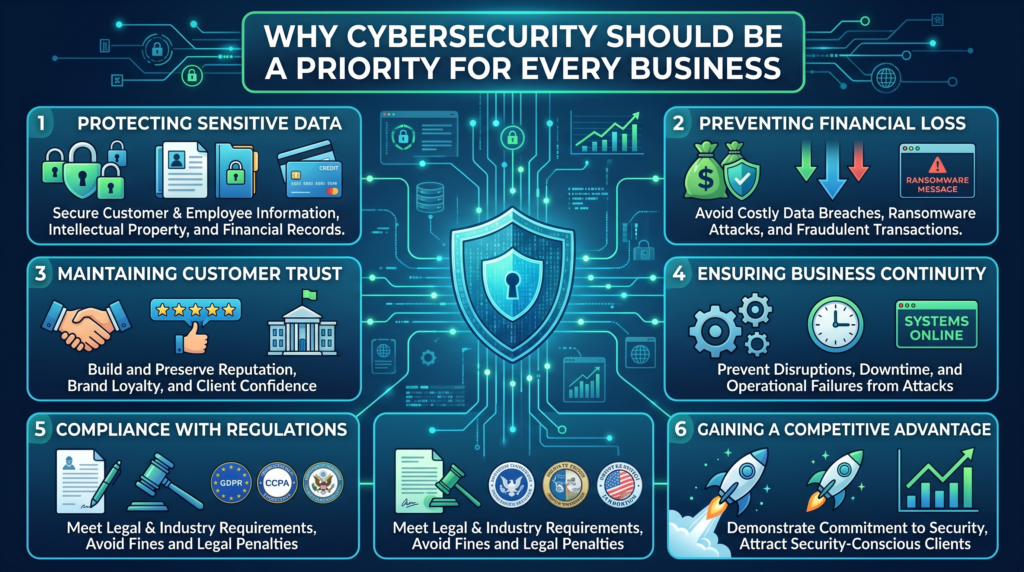
Why Cybersecurity Is Essential for Modern Businesses
Cyber threats are evolving rapidly, and businesses must stay ahead of them. Here are the key reasons why cybersecurity is critical:
- Protection of Sensitive Business Data
Every business handles valuable and sensitive data, including:
- Customer personal information
- Financial records
- Business strategies
- Employee data
- Intellectual property
If this data is compromised, it can lead to severe financial and reputational damage. Strong cybersecurity ensures this information remains protected from unauthorized access.
- Rising Cyber Threats Across All Industries
Cyberattacks are increasing in both frequency and sophistication. Hackers now use advanced techniques such as:
- AI-powered attacks
- Phishing scams
- Ransomware attacks
- Social engineering
- Malware injections
Even small businesses are targeted because they often lack advanced security systems. No business is “too small” to be attacked.
- Preventing Financial Losses
Cyber incidents can cause significant financial damage, including:
- System recovery costs
- Data restoration
- Legal penalties
- Ransom payments
- Business downtime
For many companies, a single cyberattack can lead to months of financial recovery. Investing in cybersecurity is far more cost-effective than recovering from an attack.
- Maintaining Brand Reputation and Customer Trust
Trust is the foundation of every successful business. A data breach can severely damage a company’s reputation.
Customers expect businesses to protect their personal information. If trust is broken, it can result in:
- Loss of customers
- Negative brand image
- Reduced sales
- Long-term credibility issues
At ByteBrew Technologies, we emphasize building secure systems that protect both businesses and their customers.
- Compliance With Legal and Regulatory Standards
Many industries are required to follow strict data protection regulations such as:
- GDPR (General Data Protection Regulation)
- PCI-DSS (Payment Data Security Standard)
- Industry-specific compliance rules
Failure to comply can lead to heavy fines and legal consequences. Cybersecurity ensures businesses meet these requirements and avoid penalties.
- Reducing Business Downtime
Cyberattacks like ransomware or server breaches can completely shut down operations. This leads to:
- Loss of productivity
- Interrupted services
- Revenue loss
- Customer dissatisfaction
A strong cybersecurity system helps businesses stay operational even in the face of threats.
- Securing Remote and Hybrid Work Environments
With remote work becoming the norm, employees now access business systems from multiple devices and locations. This increases risk due to:
- Unsecured networks
- Weak passwords
- Personal device usage
Cybersecurity solutions ensure secure remote access through encryption, VPNs, and multi-factor authentication.
Common Cybersecurity Threats Businesses Face
Understanding threats is the first step toward protection.
- Phishing Attacks
Fake emails or messages designed to steal sensitive information.
- Ransomware
Malicious software that locks data until a ransom is paid.
- Malware
Software that damages or disrupts systems.
- Insider Threats
Employees misusing access to company systems.
- Data Breaches
Unauthorized access to confidential data.
- Denial of Service (DoS) Attacks
Overloading systems to make them unavailable.
Impact of Weak Cybersecurity on Businesses
Ignoring cybersecurity can have serious consequences:
- Financial Damage
Recovery costs, fines, and lost revenue can be extremely high.
- Loss of Customer Trust
Customers may stop doing business with companies that fail to protect their data.
- Operational Disruption
Business processes may stop entirely during attacks.
- Legal Consequences
Non-compliance with regulations can lead to lawsuits and penalties.
- Competitive Disadvantage
Businesses with poor security lose credibility in the market.
How ByteBrew Technologies Helps Strengthen Cybersecurity
At ByteBrew Technologies, we provide modern, scalable, and secure technology solutions designed to protect businesses from cyber threats.
Our cybersecurity-focused services include:
- Secure Software Development
We build applications with security-first architecture to prevent vulnerabilities.
- Data Encryption Solutions
We ensure sensitive data remains protected both in storage and transmission.
- Cloud Security Implementation
We secure cloud environments to protect business applications and data.
- API Security
We develop secure APIs to prevent unauthorized access and data leaks.
- Penetration Testing
We identify vulnerabilities before hackers can exploit them.
- System Monitoring & Risk Assessment
We continuously monitor systems to detect and prevent threats early.
Best Practices Businesses Should Follow
To stay protected, every business should adopt these cybersecurity practices:
- Use strong and unique passwords
- Enable multi-factor authentication (MFA)
- Regularly update systems and software
- Train employees on cybersecurity awareness
- Perform regular security audits
- Backup data frequently
- Restrict access based on roles
- Use secure hosting and cloud providers
Future of Cybersecurity
Cybersecurity is evolving rapidly with technologies such as:
- Artificial Intelligence-based threat detection
- Machine learning security systems
- Zero Trust Architecture
- Blockchain security solutions
- Automated threat response systems
In the future, cybersecurity will become even more intelligent, predictive, and automated.
Conclusion
Cybersecurity is not optional—it is essential for every modern business. As cyber threats continue to grow in complexity, companies must take proactive steps to protect their data, systems, and customers.
At ByteBrew Technologies, we believe that strong cybersecurity is the foundation of digital success. Businesses that invest in security today will ensure stability, trust, and growth in the future.