
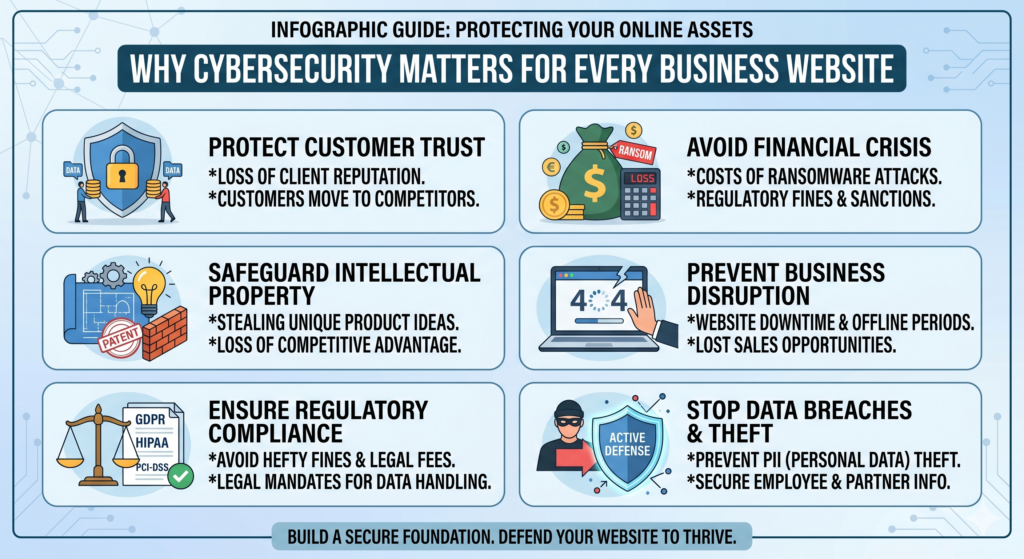
In today’s digital world, a business website is far more than an online brochure. It is the face of your company, a communication channel for customers, a marketing platform, and often a direct source of revenue. Whether you run a startup, an eCommerce store, a law firm, or a large corporation, your website stores valuable information that cybercriminals constantly target.
Thank you for reading this post, don't forget to subscribe!Cybersecurity is no longer optional. It has become a necessity for every business website, regardless of company size or industry. A single cyberattack can damage your reputation, expose sensitive customer data, interrupt business operations, and lead to financial losses.
As businesses continue to rely on digital platforms, protecting websites from cyber threats is one of the most important investments any organization can make. This article explores why cybersecurity matters, the risks businesses face, common website security threats, and practical ways to secure your business website in 2026 and beyond.
What Is Cybersecurity?
Cybersecurity refers to the process of protecting systems, websites, networks, applications, and digital data from unauthorized access, attacks, and damage. It includes technologies, strategies, and best practices designed to defend businesses against hackers, malware, phishing, ransomware, and data breaches.
For websites, cybersecurity focuses on safeguarding:
- Customer information
- Payment details
- Business databases
- User accounts
- Website files
- Servers and hosting environments
- Online transactions
- Company reputation
Without proper website security measures, businesses become vulnerable to cybercriminals looking to steal information, disrupt operations, or exploit weaknesses for financial gain.
Why Cybersecurity Is Essential for Business Websites
- Protects Sensitive Customer Data
Modern websites collect a large amount of customer information, including:
- Names
- Email addresses
- Phone numbers
- Billing information
- Credit card details
- Login credentials
If this information falls into the wrong hands, customers may suffer identity theft or financial fraud. Businesses can also face lawsuits, penalties, and loss of trust.
Strong cybersecurity measures help protect customer data and ensure that sensitive information remains secure.
- Prevents Financial Losses
Cyberattacks can cost businesses thousands—or even millions—of dollars. Common financial damages include:
- Website downtime
- Lost sales
- Data recovery expenses
- Legal fees
- Ransom payments
- Reputation repair
- Regulatory fines
For small businesses, even a single cyberattack can be devastating. Investing in cybersecurity is significantly less expensive than recovering from a security breach.
- Builds Customer Trust
Customers expect businesses to protect their information online. A secure website helps build confidence and credibility.
When users see security indicators like:
- HTTPS encryption
- Secure payment gateways
- SSL certificates
- Multi-factor authentication
they feel safer interacting with your business.
A website security breach, however, can permanently damage your reputation and reduce customer trust.
- Prevents Website Downtime
Hackers often target websites using malware, DDoS attacks, or server exploitation to make websites unavailable.
Website downtime can lead to:
- Lost customers
- Reduced revenue
- Negative SEO impact
- Poor user experience
- Brand damage
Cybersecurity tools and monitoring systems help prevent attacks and keep your website operational around the clock.
- Improves SEO Rankings
Search engines like Google prioritize secure websites. Websites without HTTPS encryption may receive warnings in browsers, discouraging visitors from continuing.
Security issues can also negatively impact SEO rankings if:
- Your website gets hacked
- Malware is detected
- Spam pages are created
- Blacklisting occurs
A secure website contributes to better search engine visibility and stronger online performance.
Common Cybersecurity Threats for Business Websites
Understanding cybersecurity threats is the first step toward protecting your website.
- Malware Attacks
Malware is malicious software designed to damage systems, steal data, or gain unauthorized access.
Types of malware include:
- Viruses
- Worms
- Spyware
- Trojans
- Ransomware
Hackers often inject malware into vulnerable websites to steal data or control servers.
- Phishing Attacks
Phishing attacks trick users into revealing sensitive information through fake emails, login pages, or messages.
Businesses are common targets because attackers seek access to:
- Admin accounts
- Banking information
- Internal systems
- Customer databases
Employee awareness and strong authentication systems are essential to preventing phishing attacks.
- SQL Injection
SQL injection attacks exploit website forms and databases by inserting malicious code into input fields.
This can allow hackers to:
- Access confidential data
- Delete databases
- Modify website content
- Gain administrative access
Secure coding practices and database protection are critical defenses.
- Cross-Site Scripting (XSS)
XSS attacks inject harmful scripts into websites, affecting visitors and administrators.
Consequences include:
- Session hijacking
- Cookie theft
- User data exposure
- Redirecting users to malicious websites
Developers must properly validate and sanitize user input to prevent XSS vulnerabilities.
- DDoS Attacks
Distributed Denial-of-Service (DDoS) attacks overload servers with massive traffic, causing websites to crash.
These attacks can:
- Interrupt operations
- Reduce sales
- Damage brand reputation
Cloud-based security services and firewalls help mitigate DDoS attacks.
- Password Attacks
Weak passwords remain one of the biggest cybersecurity risks.
Hackers use methods such as:
- Brute-force attacks
- Credential stuffing
- Password guessing
Strong password policies and multi-factor authentication significantly improve security.
The Importance of SSL Certificates
SSL (Secure Sockets Layer) certificates encrypt communication between a website and its visitors.
Websites with SSL use HTTPS instead of HTTP, providing secure data transmission.
Benefits of SSL certificates include:
- Improved customer trust
- Better SEO rankings
- Data encryption
- Protection against interception
- Secure online payments
Today, every business website should have SSL protection enabled.
How Cybersecurity Impacts SEO
Cybersecurity and SEO are closely connected.
Google favors secure websites because user safety is a priority. A compromised website can experience:
- Lower rankings
- De-indexing from search results
- Browser security warnings
- Reduced traffic
- Higher bounce rates
Secure websites typically provide:
- Faster performance
- Better user experience
- Increased trust
- Improved search visibility
Cybersecurity should therefore be considered part of every SEO strategy.
Cybersecurity for eCommerce Websites
eCommerce businesses face even greater cybersecurity risks because they process financial transactions and customer data daily.
Common threats include:
- Credit card fraud
- Payment gateway attacks
- Fake transactions
- Customer account theft
Essential eCommerce security measures include:
- PCI compliance
- SSL certificates
- Secure payment gateways
- Fraud detection systems
- Data encryption
- Regular security audits
Customers are far more likely to shop from websites they perceive as secure.
Cybersecurity Best Practices for Business Websites
- Use Strong Passwords
Encourage strong passwords that include:
- Uppercase letters
- Lowercase letters
- Numbers
- Symbols
Avoid predictable passwords such as:
- 123456
- Password123
- Company names
Password managers can also improve security.
- Enable Multi-Factor Authentication (MFA)
MFA adds an extra layer of protection by requiring additional verification beyond passwords.
Even if passwords are stolen, MFA makes unauthorized access significantly harder.
- Keep Software Updated
Outdated software often contains vulnerabilities hackers exploit.
Always update:
- CMS platforms
- Plugins
- Themes
- Frameworks
- Server software
Automatic updates can reduce security risks.
- Install a Web Application Firewall (WAF)
A WAF filters malicious traffic before it reaches your website.
Benefits include:
- Blocking hackers
- Preventing malware
- Protecting against DDoS attacks
- Monitoring suspicious activity
Firewalls are a critical cybersecurity tool for businesses.
- Perform Regular Backups
Website backups help businesses recover quickly after attacks or technical failures.
Best practices include:
- Daily backups
- Cloud storage backups
- Multiple backup locations
- Automated backup systems
Backups can prevent major business disruptions.
- Use Secure Hosting Services
Your hosting provider plays a major role in website security.
Choose hosting companies that offer:
- Server monitoring
- Malware scanning
- SSL support
- DDoS protection
- Automated backups
- Security updates
Reliable hosting improves both security and website performance.
- Limit User Access
Not every employee needs full website access.
Use role-based permissions to control access levels and reduce internal security risks.
- Monitor Website Activity
Continuous monitoring helps detect suspicious behavior early.
Security monitoring tools can identify:
- Unauthorized logins
- Malware infections
- File changes
- Traffic anomalies
Early detection prevents larger security incidents.
The Growing Threat of Ransomware
Ransomware attacks are becoming increasingly common in 2026.
Hackers encrypt business data and demand payment for recovery. These attacks can shut down operations and cause severe financial losses.
Businesses should prepare by:
- Backing up data regularly
- Using endpoint protection
- Training employees
- Restricting permissions
- Updating software frequently
Prevention is far more effective than recovery.
Why Small Businesses Are Major Targets
Many small businesses believe hackers only target large corporations. In reality, small businesses are often easier targets because they usually have weaker security systems.
Hackers know that smaller companies may lack:
- IT security teams
- Monitoring systems
- Advanced firewalls
- Cybersecurity training
Every business website, regardless of size, requires proper protection.
The Role of Employee Training in Cybersecurity
Human error remains one of the leading causes of cybersecurity breaches.
Employees should be trained to:
- Identify phishing emails
- Use strong passwords
- Avoid suspicious links
- Handle customer data securely
- Follow cybersecurity policies
Cybersecurity awareness training significantly reduces risks.
Future Cybersecurity Trends in 2026
As technology evolves, cybersecurity threats continue to grow more sophisticated.
Important trends include:
AI-Powered Cybersecurity
Artificial intelligence helps detect unusual behavior and identify threats faster than traditional systems.
Zero Trust Security
Zero trust models verify every access request instead of automatically trusting users within networks.
Cloud Security
As businesses move to cloud platforms, protecting cloud environments becomes increasingly important.
Biometric Authentication
Fingerprint scanning and facial recognition are becoming more common for secure access control.
IoT Security
Connected devices create additional vulnerabilities that businesses must secure properly.
Why Professional Website Security Matters
Professional developers and cybersecurity experts understand how to secure websites properly.
A professional software development company can help businesses:
- Identify vulnerabilities
- Implement secure coding practices
- Configure firewalls
- Improve server security
- Perform security audits
- Monitor website activity
Investing in professional cybersecurity services protects your business in the long term.
Final Thoughts
Cybersecurity is no longer a luxury—it is a critical requirement for every business website. As cyber threats continue to evolve, businesses must take proactive steps to protect their websites, customer data, and digital assets.
A secure website helps businesses:
- Protect sensitive information
- Build customer trust
- Prevent financial losses
- Improve SEO performance
- Reduce downtime
- Maintain brand reputation
Whether you operate a small business website or a large eCommerce platform, cybersecurity should be a top priority in your digital strategy.
Investing in strong cybersecurity measures today can save your business from costly problems tomorrow. In the modern digital landscape, website security is one of the foundations of long-term business success.