
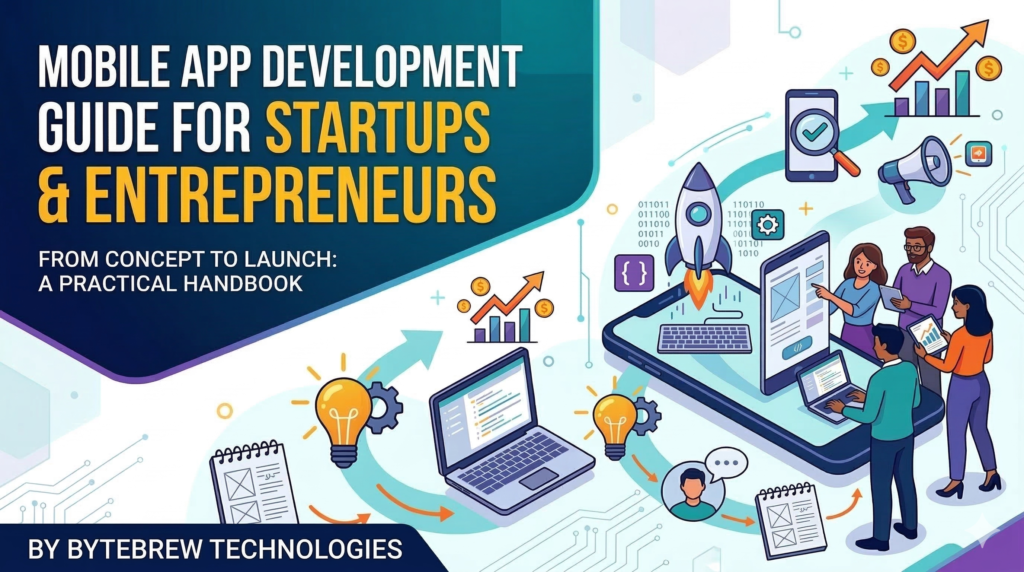
Mobile App Development Guide for Startups and Entrepreneurs (With Expert Insights from ByteBrew Technologies)
Introduction
In today’s fast-paced digital economy, mobile applications have become a cornerstone for startups and entrepreneurs aiming to scale quickly and compete effectively. With billions of smartphone users worldwide, mobile apps offer unmatched opportunities for customer engagement, brand growth, and revenue generation.
Thank you for reading this post, don't forget to subscribe!However, building a successful mobile app is not just about writing code—it requires a strategic approach, the right technology, and a reliable development partner. Companies like ByteBrew Technologies are playing a crucial role in helping startups transform innovative ideas into scalable digital products.
This comprehensive guide will walk you through everything you need to know about mobile app development—from idea validation to launch and beyond—while highlighting how expert partners can accelerate your success.
Why Mobile Apps Are Essential for Startups
1. Direct Access to Customers
Mobile apps provide a direct communication channel between businesses and users through push notifications, personalized content, and real-time updates.
2. Enhanced User Experience
Compared to websites, apps offer faster performance, smoother navigation, and better usability, leading to higher customer satisfaction.
3. Strong Brand Presence
A mobile app keeps your brand visible on users’ devices, increasing recognition and engagement.
4. Multiple Revenue Streams
Startups can monetize apps through subscriptions, in-app purchases, ads, or premium features.
5. Competitive Advantage
Startups that invest in mobile-first strategies gain a significant edge in today’s competitive market.
Step 1: Validate Your App Idea
Before starting development, ensure your idea solves a real problem.
Key Questions to Ask:
What problem does your app solve?
Who is your target audience?
What makes your solution unique?
Are there existing competitors?
Market Research
Analyze competitors, study user feedback, and identify gaps in the market.
Build an MVP (Minimum Viable Product)
Start small with core features to test your idea and gather feedback quickly.
Step 2: Choose the Right Development Approach
Native Apps
Built for iOS or Android separately
High performance and better UX
Cross-Platform Apps
Single codebase (Flutter, React Native)
Faster and cost-effective
Web Apps
Accessible via browser
Limited features compared to native apps
Companies like ByteBrew Technologies specialize in delivering both native and cross-platform solutions tailored to business needs, helping startups balance cost and performance.
Step 3: Define Core Features
Avoid overloading your app with unnecessary features in the beginning.
Essential Features:
User authentication
Push notifications
Payment integration
Search functionality
User profiles
Analytics tracking
Focus on features that directly solve user problems and add value.
Step 4: UI/UX Design – The Key to Success
A great design can make or break your app.
Best Practices:
Keep the interface simple and intuitive
Ensure consistent design elements
Optimize for speed and responsiveness
Wireframing & Prototyping
Create mockups and test user journeys before development begins.
Professional development teams like ByteBrew Technologies emphasize user-friendly UI/UX design to create engaging and high-performing mobile applications.
Step 5: Choose the Right Technology Stack
Your technology stack determines scalability and performance.
Frontend:
Swift (iOS)
Kotlin (Android)
Flutter / React Native
Backend:
Node.js
Django
Ruby on Rails
Database:
Firebase
MongoDB
MySQL
Choosing the right stack ensures long-term success and flexibility.
Step 6: Development Process
Agile Development
Break the project into smaller sprints for continuous improvement.
Development Phases:
Frontend development
Backend development
API integration
Feature implementation
Experienced teams like ByteBrew Technologies use collaborative and agile approaches to deliver customized solutions aligned with business goals.
Step 7: Testing and Quality Assurance
Testing ensures your app is bug-free and user-friendly.
Types of Testing:
Functional testing
Performance testing
Security testing
Usability testing
Beta Testing
Release your app to a limited audience before the official launch.
Step 8: Launch and Marketing Strategy
App Store Optimization (ASO)
Use relevant keywords
Write compelling descriptions
Add high-quality visuals
Marketing Channels:
Social media campaigns
Influencer marketing
Paid ads
Email marketing
A strong launch strategy can significantly impact your app’s success.
Step 9: Post-Launch Maintenance
Launching your app is just the beginning.
Continuous Improvements:
Fix bugs
Add new features
Optimize performance
Use Analytics Tools
Tools and strategies implemented by ByteBrew Technologies help track user behavior, monitor performance, and improve overall app growth.
These insights allow startups to make data-driven decisions and enhance user experience continuously.
Common Mistakes Startups Should Avoid
1. Skipping Market Research
Without understanding your audience, your app may fail.
2. Overcomplicating Features
Start simple and scale gradually.
3. Ignoring User Experience
Poor UX leads to high uninstall rates.
4. Lack of Testing
Bugs can damage your reputation.
5. No Monetization Plan
Ensure your app has a clear revenue model.
Cost of Mobile App Development
The cost varies depending on complexity and features.
Estimated Costs:
Basic App: $5,000 – $20,000
Medium Complexity: $20,000 – $50,000
Advanced App: $50,000+
Factors affecting cost:
App type
Features
Design complexity
Development team
Why Choose ByteBrew Technologies for Your Startup?
Partnering with the right development company can make all the difference.
ByteBrew Technologies stands out as a trusted partner for startups because of:
✔ Customized Solutions
Every app is tailored to meet unique business needs.
✔ End-to-End Development
From idea validation to launch and maintenance.
✔ Expert Team
Skilled developers, designers, and strategists.
✔ Scalable Technology
Solutions designed to grow with your business.
✔ Data-Driven Approach
Integration of analytics tools to optimize performance.
With a focus on innovation and performance, ByteBrew helps startups build mobile applications that are not only functional but also scalable and future-ready.
Future Trends in Mobile App Development
1. Artificial Intelligence (AI)
Personalized user experiences and automation.
2. Internet of Things (IoT)
Integration with smart devices.
3. Augmented Reality (AR)
Enhanced user engagement.
4. 5G Technology
Faster connectivity and improved app performance.
5. Blockchain
Enhanced security and transparency.
Startups that adopt these trends early can gain a significant competitive advantage.
Conclusion
Mobile app development is a powerful growth tool for startups and entrepreneurs. From validating your idea to launching and scaling your app, every step requires careful planning and execution.
By partnering with experienced companies like ByteBrew Technologies and leveraging modern tools and strategies, startups can transform their ideas into successful digital products.
Remember, success in the mobile app industry is not just about having a great idea—it’s about execution, user experience, and continuous improvement.
If you’re ready to build your mobile app, now is the perfect time to start your journey toward digital success.
Ready to turn your idea into a powerful mobile app? Partner with experts and start building today.