
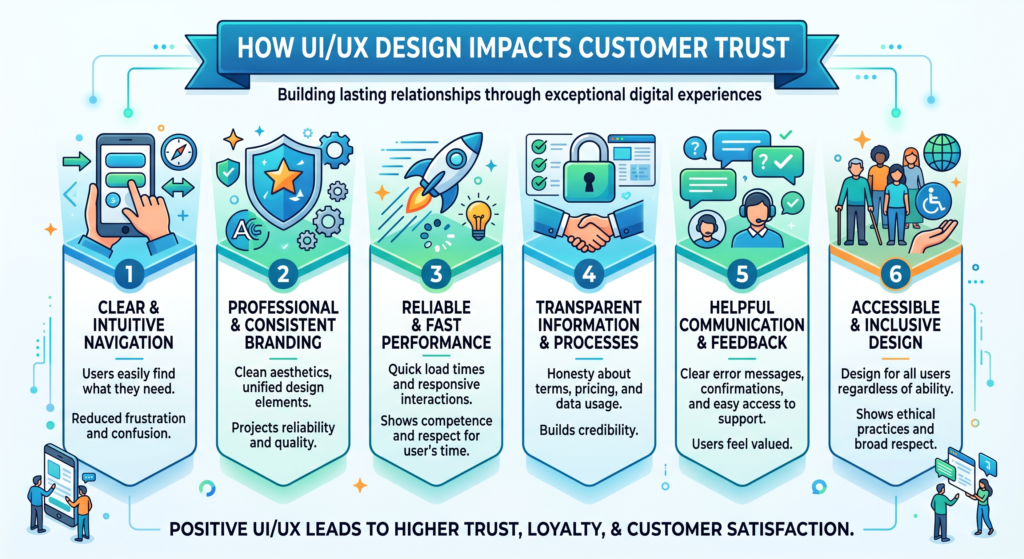
In today’s digital world, a website is often the very first interaction customers have with a business. Whether someone is shopping online, exploring services, or simply searching for information, the design and user experience of a website heavily influence how they perceive a brand. A well-designed website builds confidence, encourages engagement, and creates long-term customer relationships. On the other hand, poor design can instantly damage credibility and drive potential customers away.
Thank you for reading this post, don't forget to subscribe!UI (User Interface) and UX (User Experience) design are no longer optional elements of modern websites—they are essential business tools that directly impact customer trust, brand reputation, and conversion rates.
This article explores how UI/UX design affects customer trust, why businesses should prioritize user-centered design, and how modern companies can use design strategies to create reliable and engaging digital experiences.
Understanding UI and UX Design
Before discussing trust, it is important to understand the difference between UI and UX design.
What is UI Design?
UI (User Interface) design focuses on the visual appearance of a website or application. It includes:
- Colors
- Typography
- Buttons
- Layouts
- Icons
- Visual consistency
- Interactive elements
UI design is responsible for how users visually interact with a platform.
What is UX Design?
UX (User Experience) design focuses on the overall experience users have while interacting with a website or application. It involves:
- Website usability
- Navigation flow
- Accessibility
- Loading speed
- Mobile responsiveness
- Ease of interaction
- Customer journey optimization
UX design ensures users can complete tasks smoothly and efficiently.
Together, UI and UX create a digital environment that influences how customers feel about a business.
First Impressions Matter
Research consistently shows that users form opinions about websites within seconds. When visitors land on a poorly designed website, they often associate that poor experience with the company itself.
A clean, modern, and professional design immediately communicates:
- Reliability
- Professionalism
- Credibility
- Attention to detail
- Security
On the other hand, outdated or confusing interfaces can create doubts about the legitimacy of the business.
For example, imagine visiting two different online stores. One has a modern layout, smooth navigation, and clear product information. The other has broken layouts, unreadable fonts, and confusing menus. Most users naturally trust the first website more, even before making a purchase.
This demonstrates how UI/UX design directly affects psychological trust.
Visual Design Creates Emotional Trust
Humans are highly visual creatures. The colors, spacing, typography, and structure of a website influence emotions and perceptions.
Clean Layouts Improve Confidence
A clutter-free interface helps users feel comfortable and focused. Excessive popups, overcrowded sections, and inconsistent design elements often overwhelm visitors.
Minimal and organized layouts create a sense of professionalism and control.
Color Psychology Influences Trust
Different colors trigger different emotions:
- Blue often represents trust and reliability
- Green symbolizes growth and stability
- Black reflects sophistication and authority
- White creates simplicity and clarity
Successful brands carefully choose color palettes that align with their identity and customer expectations.
Typography Enhances Readability
Readable fonts improve communication and user comfort. Poor typography can frustrate users and reduce trust.
Good typography includes:
- Proper font sizing
- Consistent styles
- Clear spacing
- High contrast between text and background
When content is easy to read, users are more likely to engage with the website.
User Experience Builds Reliability
Even visually attractive websites can fail if the user experience is poor.
A trustworthy website should help users accomplish their goals quickly and efficiently.
Easy Navigation Improves User Satisfaction
Users should never feel lost while browsing a website.
Clear navigation menus, logical page structures, and intuitive pathways help users find information easily.
Good navigation improves:
- Customer satisfaction
- Time spent on the website
- Conversion rates
- Brand perception
Poor navigation creates frustration and increases bounce rates.
Fast Loading Speeds Increase Trust
Website speed significantly affects customer confidence.
Slow websites often create the impression that:
- The business is outdated
- The website is insecure
- The company lacks professionalism
Studies show users frequently abandon websites that take too long to load.
Optimizing performance through:
- Compressed images
- Clean coding
- Efficient hosting
- Proper caching
can dramatically improve trust and retention.
Mobile Responsiveness Matters More Than Ever
Modern users browse websites primarily from smartphones and tablets.
A website that fails to adapt to mobile devices instantly damages credibility.
Responsive design ensures:
- Proper scaling on all screen sizes
- Easy mobile navigation
- Fast loading performance
- Better accessibility
Businesses that prioritize mobile-friendly experiences demonstrate professionalism and customer awareness.
Google also favors mobile-optimized websites in search rankings, making responsiveness essential for both trust and SEO performance.
Consistency Strengthens Brand Identity
Consistency is one of the strongest trust-building factors in UI/UX design.
When users encounter consistent:
- Colors
- Fonts
- Button styles
- Layout structures
- Messaging
they develop familiarity with the brand.
Inconsistent design elements can make websites feel unprofessional or unfinished.
Strong consistency creates:
- Brand recognition
- Predictability
- User comfort
- Professional perception
This is especially important for businesses operating in competitive industries.
Security Signals Increase Customer Confidence
Trust is deeply connected to security.
Users are increasingly cautious about sharing personal information online.
UI/UX design plays a critical role in communicating safety through:
- HTTPS security indicators
- Secure payment badges
- Professional checkout designs
- Privacy policy visibility
- Trust seals
- Verified customer reviews
Even subtle design details can influence whether users feel safe completing transactions.
A poorly designed checkout page can cause users to abandon purchases due to security concerns.
User-Centered Design Encourages Loyalty
Modern businesses must focus on user-centered design rather than purely aesthetic design.
User-centered design prioritizes customer needs, preferences, and behaviors.
This approach includes:
- User research
- Accessibility testing
- Customer feedback analysis
- Behavioral optimization
When users feel understood, they are more likely to trust the brand and become repeat customers.
Trust leads to:
- Higher retention
- Increased referrals
- Better customer satisfaction
- Stronger brand loyalty
Accessibility Improves Inclusivity and Trust
Accessible websites create positive experiences for all users, including individuals with disabilities.
Accessibility improvements include:
- Keyboard navigation support
- Screen reader compatibility
- High contrast text
- Alternative image text
- Proper semantic structure
Businesses that invest in accessibility demonstrate responsibility, inclusiveness, and professionalism.
This strengthens customer trust and expands audience reach.
The Role of UX Writing in Building Trust
Words are also part of the user experience.
Clear and transparent communication improves customer confidence.
Good UX writing includes:
- Clear call-to-action buttons
- Helpful error messages
- Simple instructions
- Transparent pricing
- Honest messaging
Confusing or misleading content damages trust immediately.
For example:
- “Submit” is less effective than “Get Your Free Consultation”
- Generic error messages frustrate users
- Hidden pricing creates suspicion
Clear communication makes users feel respected and informed.
Social Proof and Trust Elements
Modern UI/UX design strategically incorporates social proof.
This includes:
- Customer testimonials
- Case studies
- Reviews
- Ratings
- Client logos
- Success metrics
These elements reassure visitors that others have already trusted the business.
Well-designed social proof sections improve credibility significantly.
However, fake or poorly displayed testimonials can have the opposite effect.
Authenticity is essential.
Emotional Design and Human Connection
Successful UI/UX design goes beyond functionality—it creates emotional connections.
Emotionally engaging experiences help brands stand out.
This can be achieved through:
- Personalized experiences
- Interactive elements
- Smooth animations
- Friendly messaging
- Visual storytelling
When users enjoy interacting with a website, they associate positive feelings with the brand itself.
This emotional trust becomes a powerful competitive advantage.
Poor UI/UX Design Can Destroy Trust
Many businesses underestimate the damage caused by poor design.
Common trust-destroying issues include:
- Broken links
- Slow loading pages
- Confusing layouts
- Too many advertisements
- Non-responsive mobile designs
- Outdated visuals
- Difficult checkout processes
Even small usability issues can create frustration and reduce credibility.
Users often leave websites within seconds if they encounter poor experiences.
Since competition is only one click away, businesses cannot afford weak UI/UX design.
How UI/UX Impacts Conversion Rates
Customer trust directly affects conversions.
A trustworthy website increases:
- Product purchases
- Service inquiries
- Newsletter signups
- Contact form submissions
- User engagement
Good UI/UX removes barriers between users and business goals.
Optimized experiences guide users naturally toward actions.
For example:
- Clear CTA buttons improve conversions
- Simple checkout processes reduce abandonment
- Intuitive layouts improve engagement
Trust-driven design increases both customer satisfaction and revenue.
The SEO Connection
UI/UX design also impacts search engine rankings.
Search engines prioritize websites that provide good user experiences.
Important UX-related SEO factors include:
- Mobile responsiveness
- Page speed
- User engagement
- Bounce rates
- Accessibility
- Navigation structure
A strong user experience improves both trust and online visibility.
This creates long-term digital growth opportunities for businesses.
Modern UI/UX Trends That Build Trust
Businesses should stay updated with modern design trends while maintaining usability.
Some current trust-building trends include:
Dark Mode Options
Provides visual comfort and modern aesthetics.
Micro-Interactions
Small animations that improve engagement and feedback.
Minimalist Design
Clean layouts improve focus and professionalism.
AI-Powered Personalization
Customized experiences improve relevance.
Voice User Interfaces
Enhances accessibility and convenience.
Interactive Design Elements
Increase engagement without overwhelming users.
However, trends should never compromise usability.
Functionality must always remain the priority.
Real-World Business Impact
Many globally successful companies invest heavily in UI/UX design because they understand its business value.
Companies like:
- Apple
- Airbnb
- Amazon
- Netflix
have built enormous customer trust through seamless digital experiences.
Their success demonstrates that exceptional design is not just about appearance—it is about creating confidence and convenience.
How Businesses Can Improve UI/UX Design
Businesses looking to strengthen customer trust should focus on:
Conducting User Research
Understand audience needs and behaviors.
Simplifying Navigation
Reduce unnecessary complexity.
Optimizing Website Speed
Performance directly affects trust.
Improving Mobile Experience
Ensure responsive functionality.
Using Consistent Branding
Maintain visual and messaging consistency.
Prioritizing Accessibility
Create inclusive experiences.
Testing Regularly
Use analytics and user feedback to improve continuously.
Investing in Professional Design
Professional UI/UX designers create stronger digital experiences.
The Future of UI/UX and Customer Trust
As technology evolves, customer expectations continue to rise.
Future UI/UX trends will likely focus on:
- AI-driven personalization
- Augmented reality experiences
- Advanced accessibility
- Hyper-fast interfaces
- Immersive interactions
Businesses that fail to adapt may struggle to maintain trust in increasingly competitive markets.
The companies that prioritize user experience today will be better positioned for long-term digital success tomorrow.
Conclusion
UI/UX design is far more than visual decoration—it is a core business strategy that directly impacts customer trust, credibility, and growth.
Modern customers expect websites to be:
- Fast
- Secure
- Easy to navigate
- Mobile-friendly
- Visually appealing
- User-focused
When businesses invest in high-quality UI/UX design, they create digital experiences that inspire confidence and encourage customer loyalty.
In an era where online competition continues to grow, trust has become one of the most valuable assets a business can build. Effective UI/UX design serves as the foundation of that trust, helping businesses attract, engage, and retain customers in the digital world.
For businesses aiming to succeed online, prioritizing UI/UX design is no longer optional—it is essential.