
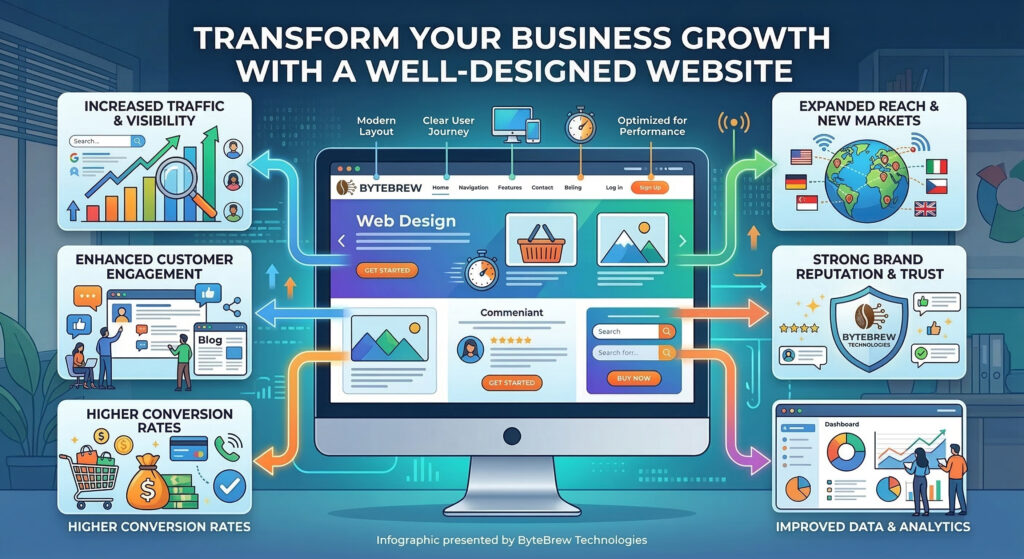
In today’s digital-first world, a business’s website is often its first impression. Whether a potential customer finds you via Google, social media, or a referral, your website is the gateway to your brand. A well-designed website is more than just aesthetics—it is a powerful tool that can directly influence your business growth, boost credibility, and drive revenue.
Thank you for reading this post, don't forget to subscribe!In this blog, we’ll explore why investing in a professional website is essential, the key elements of a well-designed site, and how it can accelerate your business growth.
1. The Digital First Impression
Your website often serves as the first interaction between your business and potential customers. According to studies, 94% of first impressions are design-related. A clean, professional, and user-friendly design builds trust immediately. Conversely, a poorly designed or outdated website can make visitors question your legitimacy.
Key Takeaways:
A professional design reflects credibility.
Mobile responsiveness ensures accessibility for all users.
Fast-loading pages improve user satisfaction and retention.
2. Boosting Credibility and Brand Authority
A well-crafted website establishes your brand as trustworthy and authoritative. From the color scheme to typography, visual elements communicate professionalism. Integrating features like testimonials, case studies, and client logos reinforces credibility.
Businesses with professionally designed websites are perceived as 50% more trustworthy than those with amateur-looking sites. Customers are more likely to buy, subscribe, or engage when they feel confident in your brand.
Action Steps:
Include client testimonials and success stories.
Showcase awards, certifications, and partnerships.
Maintain a consistent visual identity aligned with your brand.
3. Enhancing User Experience (UX) and Engagement
A website isn’t just about looking good—it’s about how it functions. User experience (UX) determines whether visitors stay, explore, and convert. Poor navigation, confusing layouts, or slow load times drive potential customers away.
Well-designed websites focus on:
Intuitive navigation: Visitors find information quickly.
Clear call-to-actions (CTAs): Guide users toward purchasing, signing up, or contacting you.
Responsive design: Works seamlessly on desktops, tablets, and smartphones.
Real-World Impact:
Businesses that prioritize UX see up to a 400% increase in conversion rates. A simple change, like a clearer CTA button, can dramatically boost engagement.
4. Search Engine Optimization (SEO) Benefits
A visually appealing website alone is not enough. SEO-friendly design ensures your business ranks higher on search engines, increasing visibility and driving organic traffic.
Important SEO Features in Website Design:
Clean URL structures for easy indexing by search engines.
Fast page load speed to reduce bounce rates.
Mobile-friendly layouts since Google prioritizes mobile-first indexing.
Structured data and metadata to enhance search engine understanding.
Integrating SEO from the design stage is more effective than trying to fix issues later.
5. Generating Leads and Increasing Sales
A strategic website design can act as a 24/7 sales representative. Every visitor has the potential to become a lead or customer if guided correctly.
Features That Boost Conversion:
Contact forms placed strategically across pages.
E-commerce capabilities for selling products or services online.
Live chat or chatbots to engage visitors in real time.
Personalized content to match user intent.
For example, integrating an online booking system or product catalog can streamline the buying process, increasing sales and reducing customer friction.
6. Analytics and Data-Driven Decisions
A professional website allows you to track visitor behavior using tools like Google Analytics. Understanding which pages attract traffic, how users navigate your site, and where they drop off enables you to make informed decisions to improve performance.
Key Metrics to Monitor:
Page views and session duration
Bounce rate
Conversion rates
Traffic sources
These insights help businesses optimize their website continually, ensuring growth over time.
7. Strengthening Marketing Campaigns
Your website serves as the hub for all marketing efforts. Social media, email marketing, paid advertising, and content marketing all direct users to your website. Without a strong website, these campaigns lose effectiveness.
Marketing Advantages of a Well-Designed Website:
Landing pages optimized for campaigns increase conversion.
Integration with email marketing tools collects leads efficiently.
High-quality content improves organic reach and engagement.
A cohesive website design reinforces brand messaging and ensures consistency across marketing channels.
8. Competitive Advantage
In most industries, competitors already invest in quality websites. Without a strong online presence, businesses risk losing potential customers to competitors. A website that stands out visually, performs well, and provides a seamless experience can become a major differentiator.
Strategies for Gaining an Edge:
Use modern, clean design trends without overcomplicating navigation.
Implement innovative features such as interactive product demos or personalized recommendations.
Maintain up-to-date content that reflects industry leadership.
9. Long-Term ROI of Website Investment
A professional website is an investment, not an expense. The returns are measurable in brand awareness, leads, sales, and customer loyalty. Companies often see revenue growth as a direct result of website optimization and effective online presence.
Supporting Facts:
Businesses with optimized websites generate 2–3x more leads.
Companies with strong websites have higher customer retention rates.
A website reduces marketing costs by automating information and lead generation.
10. Case Study: Real Business Impact
Consider a small business that revamped its outdated website. By improving UX, mobile responsiveness, and implementing SEO strategies, the company saw:
70% increase in organic traffic within six months
50% boost in leads generated through the website
Higher customer engagement through blog content and downloadable resources
This demonstrates the tangible benefits of prioritizing professional website design.
11. How to Ensure Your Website Drives Growth
To maximize the impact of your website on business growth:
Hire professionals: Work with skilled web designers and developers.
Focus on UX and responsive design: Make it easy for users to navigate.
Incorporate SEO best practices: Optimize content and structure for search engines.
Use analytics to improve continuously: Track performance and adjust strategies.
Keep branding consistent: Your website should reflect your business identity.
Conclusion
A well-designed website is no longer optional—it is essential for businesses looking to grow in 2026 and beyond. From building credibility to driving leads, increasing conversions, and supporting marketing campaigns, the website is at the center of business success.
Investing in a professional website design is an investment in your business growth. By focusing on user experience, SEO, content quality, and analytics, you can transform your website from a digital presence into a powerful growth engine.
Whether you’re a startup or an established company, prioritizing a professional, functional, and engaging website ensures your business is ready to compete, convert, and thrive in the digital era.