
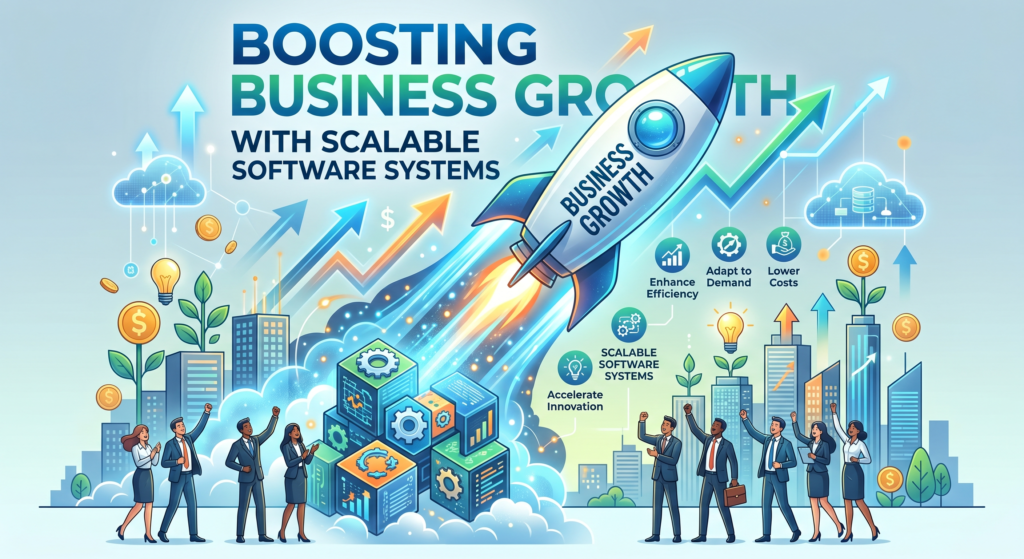
In today’s fast-paced digital economy, businesses are evolving faster than ever before. Customers demand instant services, seamless digital experiences, and reliable platforms that work without interruption. To stay competitive, organizations must adopt technology that not only meets current needs but also scales effortlessly as they grow.
Thank you for reading this post, don't forget to subscribe!This is where scalable software systems play a critical role.
A scalable software system ensures that applications, platforms, and digital products can handle increasing users, data, and workloads without compromising performance. Whether you are a startup aiming for rapid growth or an enterprise expanding globally, scalability is the foundation of long-term digital success.
At ByteBrew Technologies, we believe that scalable architecture is not just a technical requirement—it is a strategic investment that directly influences business growth, customer satisfaction, and operational efficiency.
In this article, we will explore how scalable software systems drive business growth, their benefits, architecture principles, real-world applications, and why they are essential in modern software development.
What Are Scalable Software Systems?
A scalable software system is designed to grow and adapt efficiently as demand increases. This means that when your user base expands or your data volume grows, the system continues to perform smoothly without downtime or performance degradation.
Scalability typically comes in two forms:
- Vertical Scalability (Scaling Up)
Vertical scaling involves increasing the capacity of a single machine or server by adding more CPU, RAM, or storage.
- Horizontal Scalability (Scaling Out)
Horizontal scaling involves adding multiple servers or nodes to distribute the workload.
In modern software development, horizontal scalability is widely preferred due to its flexibility, reliability, and cost-effectiveness.
Why Scalability Is Essential for Business Growth
Scalability is not just a technical feature—it is a core business enabler.
Here’s why it matters:
- Supports Business Expansion
As your business grows, your software must support more users, transactions, and operations. Scalable systems ensure uninterrupted growth without requiring complete system redesigns.
- Ensures System Stability
Unscalable systems often crash or slow down during peak usage. Scalability prevents downtime and ensures continuous availability.
- Enhances User Experience
Fast, reliable, and responsive applications improve customer satisfaction and retention.
- Reduces Operational Costs
Instead of rebuilding systems repeatedly, scalable architecture allows gradual upgrades, saving time and development costs.
Key Benefits of Scalable Software Systems
- Consistent High Performance
Scalable systems maintain speed and performance even during high traffic loads, such as marketing campaigns or seasonal sales.
- Flexibility for Growth
Businesses can expand operations without worrying about system limitations.
- Efficient Resource Utilization
Resources are distributed intelligently across systems, reducing waste and improving efficiency.
- Future-Ready Infrastructure
Scalable systems are built to accommodate future technologies and increasing demand.
- Improved Security and Reliability
Modern scalable architectures include robust security measures and redundancy, ensuring data safety and system uptime.
How Scalable Systems Drive Business Growth
- Enabling Digital Transformation
Digital transformation is a necessity in today’s competitive environment. Scalable systems allow businesses to transition from traditional workflows to digital platforms seamlessly.
For example, a business moving from manual operations to an online platform needs infrastructure capable of handling sudden growth in users and data.
- Powering E-Commerce Success
E-commerce businesses experience fluctuating traffic, especially during sales events and holidays. Scalable systems ensure:
- Smooth website performance during peak traffic
- Faster checkout experiences
- Reduced cart abandonment rates
- Increased conversions and revenue
Without scalability, even a successful marketing campaign can lead to website crashes and lost sales.
- Strengthening SaaS Platforms
Software-as-a-Service (SaaS) companies rely heavily on scalability. As user subscriptions increase, the system must support more concurrent users without performance issues.
Cloud-based scalable infrastructure allows SaaS platforms to grow globally without physical limitations.
- Enhancing Data Processing and Analytics
As businesses grow, they generate large volumes of data. Scalable systems enable efficient:
- Data storage
- Processing
- Real-time analytics
This helps businesses make smarter, data-driven decisions that improve marketing, sales, and operations.
- Supporting Global Expansion
Businesses expanding into international markets need systems that can handle multiple regions, currencies, and languages.
Scalable software systems allow companies to expand globally without rebuilding their core infrastructure.
Architecture Behind Scalable Systems
Building scalable systems requires modern software architecture strategies.
- Microservices Architecture
Instead of a single large application, systems are divided into smaller, independent services.
Advantages:
- Independent deployment
- Easier maintenance
- Faster scaling of individual components
- Cloud Computing Infrastructure
Cloud platforms provide flexible and on-demand resources that scale automatically.
Common platforms include:
- Amazon Web Services (AWS)
- Microsoft Azure
- Google Cloud Platform
- Load Balancing Systems
Load balancers distribute traffic evenly across multiple servers to prevent overload and ensure stability.
- Database Scaling Techniques
Efficient data management is achieved through:
- Database replication
- Sharding
- Distributed databases
- Caching Mechanisms
Caching reduces load times by storing frequently accessed data for quick retrieval.
Real-World Example of Scalability
Consider a ride-hailing application. Under normal conditions, the system processes a steady number of ride requests. However, during rush hours, demand increases significantly.
A scalable system ensures:
- Instant ride matching
- Real-time driver updates
- Smooth payment processing
- Continuous app performance
Without scalability, delays and system failures would result in poor user experience and lost revenue.
Challenges of Non-Scalable Systems
Businesses that fail to implement scalability often face serious issues such as:
- System crashes during peak usage
- Slow application performance
- Poor customer satisfaction
- Increased maintenance costs
- Limited ability to expand
These challenges can significantly hinder business growth and brand reputation.
Best Practices for Building Scalable Systems
- Design for Scalability from Day One
Scalability should be considered during the initial planning phase of software development.
- Use Cloud-Based Solutions
Cloud platforms offer flexibility and reduce infrastructure management costs.
- Adopt Microservices Architecture
Breaking applications into smaller components makes scaling easier and more efficient.
- Monitor System Performance
Continuous monitoring helps identify bottlenecks and optimize performance.
- Optimize Code Regularly
Clean and efficient code improves speed and reduces system load.
ByteBrew Technologies’ Approach to Scalable Solutions
At ByteBrew Technologies, we specialize in building high-performance, scalable, and future-ready software systems tailored to business needs.
Our approach includes:
- Custom software architecture design
- Cloud-native application development
- Scalable web and mobile solutions
- Performance optimization strategies
- Long-term system support and maintenance
We focus on delivering solutions that not only solve today’s challenges but also prepare businesses for future growth.
The Future of Scalable Software Systems
The future of scalability is evolving rapidly with advancements such as:
- Artificial Intelligence (AI)-driven scaling
- Serverless computing models
- Edge computing technologies
- Automated infrastructure management
- Intelligent cloud optimization
These innovations will make software systems more autonomous, efficient, and cost-effective than ever before.
Conclusion
Scalable software systems are the backbone of modern digital businesses. They enable organizations to grow without limitations, deliver seamless user experiences, and adapt quickly to changing market demands.
From startups to global enterprises, scalability is the key to long-term success.
At ByteBrew Technologies, we are committed to building robust, scalable, and high-performing software solutions that empower businesses to achieve sustainable growth in a competitive digital landscape.
Investing in scalable systems today means building a stronger, smarter, and more successful business tomorrow.