Introduction
Thank you for reading this post, don't forget to subscribe!Software as a Service (SaaS) has become one of the most powerful and scalable business models in today’s digital world. From startups to large enterprises, companies are rapidly adopting SaaS solutions to streamline operations, improve efficiency, and reduce costs.
In 2026, the SaaS industry is more competitive than ever. Launching a successful SaaS product requires not just an innovative idea, but also a strategic approach, the right technology, and continuous improvement.
In this comprehensive guide, we’ll walk you through the complete SaaS development process—from idea validation to scaling your product successfully.
What is SaaS?
SaaS (Software as a Service) is a cloud-based software delivery model where users access applications through a web browser instead of installing them on their devices.
Key Features of SaaS:
- Cloud-based access from anywhere
- Subscription-based pricing
- Automatic updates and maintenance
- High scalability
- Multi-user (multi-tenant) architecture
Why SaaS is Growing Rapidly in 2026
- Cost-Effective Solutions
Businesses eliminate upfront infrastructure costs and pay only for what they use.
- Remote Accessibility
Teams can access SaaS tools from anywhere, supporting remote work.
- Scalability
SaaS platforms grow with your business needs.
- Integration Flexibility
Easily integrates with CRMs, payment systems, and third-party tools.
- AI & Automation Integration
Modern SaaS products leverage AI to enhance productivity and decision-making.
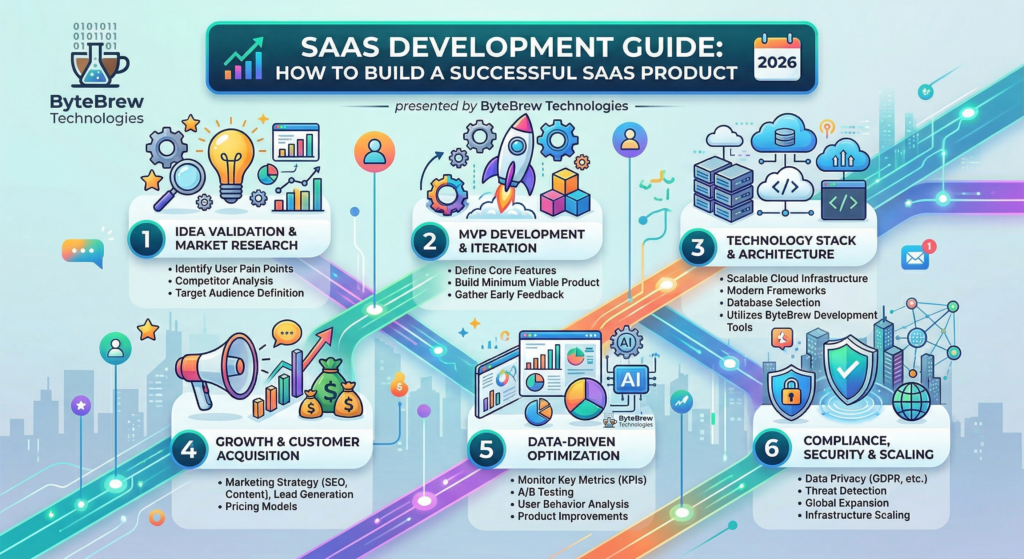
Step-by-Step Guide to Building a SaaS Product
- Validate Your SaaS Idea
Before starting development, validate your idea to ensure market demand.
How to Validate:
- Identify a real problem
- Research your target market
- Analyze competitors
- Collect user feedback
- Build a simple landing page
👉 Pro Tip: Focus on solving a specific niche problem instead of targeting a broad audience.
- Identify Your Target Audience
Understanding your users is essential for success.
Define User Personas:
- Industry
- Business size
- Pain points
- Budget
- Goals
- Choose the Right SaaS Business Model
Popular Pricing Models:
- Subscription-based (monthly/yearly)
- Freemium
- Pay-as-you-go
- Tiered pricing
👉 Start simple and refine your pricing based on user behavior.
- Build an MVP (Minimum Viable Product)
An MVP allows you to launch quickly with essential features.
Include in MVP:
- Core functionalities
- Basic UI/UX
- Essential integrations
- Feedback system
Benefits:
- Faster launch
- Lower cost
- Real user insights
- Select the Right Technology Stack
Frontend:
- React.js
- Vue.js
Backend:
- Node.js
- Django
- Laravel
Database:
- PostgreSQL
- MongoDB
Cloud Platforms:
- AWS
- Google Cloud
- Microsoft Azure
- Focus on UI/UX Design
User experience plays a major role in SaaS success.
Best Practices:
- Clean and intuitive design
- Easy navigation
- Mobile responsiveness
- Fast performance
- Develop Your SaaS Product
Development Phases:
- Planning
- UI/UX Design
- Development
- Testing
- Deployment
Important Considerations:
- Security implementation
- Performance optimization
- API integrations
- Ensure Security & Compliance
Key Security Measures:
- SSL encryption
- Two-factor authentication
- Regular backups
- Data protection compliance
- Launch Your SaaS Product
Pre-Launch Checklist:
- Beta testing
- Bug fixing
- Optimized landing page
- Marketing plan
Launch Channels:
- Product directories
- Social media
- Email campaigns
- Market Your SaaS Product
Effective Marketing Strategies:
- SEO optimization
- Content marketing
- Paid advertising
- LinkedIn outreach
Content Ideas:
- Blog posts
- Case studies
- Tutorials
- Videos
- Focus on Customer Retention
Retention Strategies:
- Free trials
- Smooth onboarding
- Strong customer support
- Regular updates
Key Metrics to Track:
- Customer Acquisition Cost (CAC)
- Customer Lifetime Value (CLTV)
- Churn Rate
- Scale Your SaaS Business
Scaling Strategies:
- Upgrade infrastructure
- Add advanced features
- Expand into new markets
- Form strategic partnerships
Common Mistakes to Avoid
- Skipping market validation
- Building too many features early
- Ignoring user feedback
- Weak marketing strategy
- Poor customer support
Future Trends in SaaS (2026 & Beyond)
- AI-powered SaaS solutions
- No-code and low-code platforms
- Vertical SaaS products
- Enhanced cybersecurity
- IoT integrations
Why Choose ByteBrew Technologies for SaaS Development
At ByteBrew Technologies, we specialize in building scalable and high-performance SaaS products tailored to your business needs.
Our Services Include:
- SaaS Product Development
- MVP Development
- AI & Automation Solutions
- Custom Software Development
Conclusion
Building a successful SaaS product in 2026 requires a clear strategy, the right technology, and continuous improvement. By following a structured approach—from idea validation to scaling—you can turn your SaaS idea into a profitable and sustainable business.
Call to Action
🚀 Ready to build your SaaS product?
Contact ByteBrew Technologies today and let’s turn your idea into a powerful, scalable solution.