
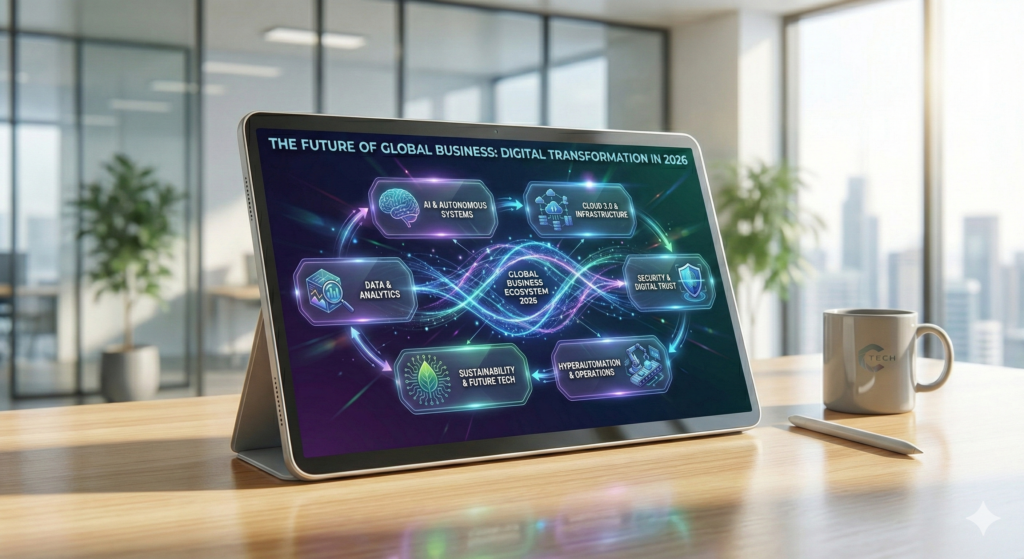
In an era defined by rapid technological evolution, digital transformation has moved from being a buzzword to an essential strategy for businesses seeking growth, resilience, and global competitiveness. As we advance into 2026, companies around the world are rapidly adapting new digital frameworks — not just to survive, but to lead.
Thank you for reading this post, don't forget to subscribe!This comprehensive guide explores how digital transformation is reshaping global businesses in 2026, why it matters, and what forward-thinking companies are doing to leverage its full potential.
Table of Contents
What Is Digital Transformation?
Why Digital Transformation Matters in 2026
Key Drivers of Digital Transformation
Major Technologies Powering Digital Change
How Digital Transformation Is Reshaping Industries
Finance
Healthcare
Retail & E-Commerce
Manufacturing
Education
Organizational Benefits of Digital Transformation
Challenges Businesses Face in Digital Transformation
Best Practices for Successful Digital Transformation
Future Trends: What’s Next in Digital Transformation
Conclusion
1. What Is Digital Transformation?
Digital transformation is the strategic integration of digital technologies into all aspects of business operations, fundamentally changing how organizations operate and deliver value to customers. It goes beyond adopting new tools — it’s a mindset shift that fosters agility, innovation, and data-driven decision-making.
In 2026, digital transformation is no longer optional. Instead, it’s a business imperative — a cornerstone of competitiveness in a world where innovation cycles are shortening and customer expectations are rising.
2. Why Digital Transformation Matters in 2026
1. Customer Expectations Are Evolving
Customers today demand fast, personalized, seamless experiences — whether they’re shopping online, interacting with support, or using mobile apps. Digital capabilities are crucial to meet these expectations.
2. Remote & Hybrid Work Is Standard
Post-pandemic work models are now permanent. Digital tools enable collaboration, productivity, and connectivity across distributed teams globally.
3. Data Is a Strategic Asset
Data is no longer just an operational byproduct — it’s a core asset that drives decision-making, customer insights, and competitive advantage.
4. Competition Is Global
Even small businesses compete globally thanks to online platforms. Digital transformation levels the playing field and enables companies of all sizes to scale internationally.
3. Key Drivers of Digital Transformation
Digital transformation is a response to multiple forces reshaping the global landscape:
• Changing Consumer Behavior
People increasingly rely on digital channels for everything — shopping, banking, healthcare, communication, and entertainment.
• Disruptive Technologies
Artificial intelligence (AI), cloud computing, automation, the Internet of Things (IoT), and blockchain are transforming how businesses operate and deliver value.
• Competitive Pressure
Companies that fail to adapt risk falling behind. Digital transformation is now a strategic priority for survival.
• Regulatory Changes
Data privacy regulations, cybersecurity standards, and digital compliance requirements are pushing organizations to modernize.
4. Major Technologies Powering Digital Change
Here are the key digital technologies driving transformation in 2026:
🔹 Artificial Intelligence & Machine Learning
AI analyzes data, automates tasks, enhances decision-making, and enables personalized experiences.
🔹 Cloud Computing
Cloud infrastructure provides scalable, cost-effective, and secure platforms for digital applications and storage.
🔹 Internet of Things (IoT)
IoT connects devices to networks, enabling real-time tracking, monitoring, and predictive analytics.
🔹 Automation & Robotics
Automation accelerates repetitive workflows and improves operational efficiency.
🔹 Blockchain
Blockchain enhances transparency, security, and trust in transactions and data management.
🔹 5G & Connectivity
Faster, more reliable connectivity expands digital services, especially in sectors like remote operations and telemedicine.
5. How Digital Transformation Is Reshaping Industries
A. Finance — Digital Banking & Fintech Revolution
Digital transformation has completely changed how the financial sector operates. Traditional banks now compete with fintech startups that offer:
Instant digital payments
Mobile banking
AI-powered investment insights
Blockchain-enabled secure transactions
Customers now expect real-time account access, seamless mobile experiences, and frictionless digital services.
B. Healthcare — Smarter Patient Care with Technology
Technology has made healthcare more accessible and efficient. Digital transformation in healthcare includes:
Telemedicine consultations
Wearable devices tracking health metrics
AI-assisted diagnostics
Electronic health record systems
Healthcare providers are now using data to predict disease trends, personalize treatment plans, and improve patient outcomes.
C. Retail & E-Commerce — Beyond Traditional Shopping
Retail is one of the most digitally transformed sectors:
AI-driven product recommendations
AR/VR virtual shopping experiences
Omnichannel customer journeys
Retailers now harness data analytics to optimize inventory, forecast demand, and personalize promotions.
D. Manufacturing — Smart Factories & IoT Integration
Manufacturers are adopting:
IoT sensors for real-time monitoring
Robotics for automation
Predictive maintenance to reduce downtime
This wave of digitization — known as Industry 4.0 — enhances productivity and reduces operational costs.
E. Education — Remote & Personalized Learning
Digital transformation has reshaped education through:
E-learning platforms
Virtual classrooms
Adaptive learning software
Students can now access global courses, personalized lessons, and real-time feedback, breaking barriers of geography and cost.
6. Organizational Benefits of Digital Transformation
1. Enhanced Customer Experience
By leveraging digital tools, companies deliver faster, smarter, and more meaningful interactions.
2. Improved Efficiency & Productivity
Automation and optimized workflows eliminate manual tasks and reduce errors.
3. Data-Driven Decisions
Real-time analytics provides actionable insights that improve strategy and forecasting.
4. Greater Innovation Capacity
Organizations with digital systems are more agile and can adapt quickly to change.
5. Scalable Growth
Cloud technology and digital platforms empower businesses to expand globally with minimal infrastructure cost.
7. Challenges Businesses Face in Digital Transformation
Despite its benefits, digital transformation isn’t without obstacles:
⚠️ Legacy Systems
Old systems are difficult to integrate with new tech, often leading to high migration costs.
⚠️ Skills Gap
Many organizations lack talent in AI, cloud computing, and data science.
⚠️ Resistance to Change
Employees may resist new processes or technologies, slowing adoption.
⚠️ Cybersecurity Risks
As digital infrastructure grows, so does exposure to cyber threats.
⚠️ Data Privacy & Compliance
Organizations must navigate complex global regulations, like GDPR and emerging digital laws.
8. Best Practices for Successful Digital Transformation
To transform effectively, organizations should follow these best practices:
1. Start With a Clear Strategy
Define objectives and outcomes — not just tools.
2. Invest in Talent & Culture
Train teams, hire experts, and instill a culture of innovation.
3. Partner With Tech Experts
Work with technology partners who understand your business goals.
4. Prioritize Customer-Centric Design
Map digital initiatives to customer needs and expectations.
5. Use Data as a Strategic Asset
Implement analytics systems early to inform decision-making.
6. Embrace Agile Methodologies
Flexible workflows allow faster iteration and adaptation.
7. Monitor, Measure & Optimize
Track KPIs and adjust strategy based on real performance data.
9. Future Trends: What’s Next in Digital Transformation
As we move forward, digital transformation will continue evolving. These trends will define the next phase:
🔹 Hyper-Automation
Combining AI, machine learning, and automation for fully autonomous systems.
🔹 Digital Twins
Simulated virtual models of real systems — used in manufacturing, healthcare, and urban planning.
🔹 Quantum Computing
Revolutionizing data processing, optimization, and cryptography.
🔹 Sustainable Tech
Green IT solutions that reduce environmental impact.
🔹 Personalized AI Assistants
AI agents that understand user behavior and preferences deeply.
10. Conclusion
Digital transformation in 2026 is no longer a competitive advantage — it’s a business essential. Companies that embrace digital change are not just improving operations — they’re redefining industries, unlocking new value streams, and delivering richer experiences to customers worldwide.
Whether you are a startup, SME, or global enterprise, digital transformation can:
✔ Increase operational efficiency
✔ Empower data-driven growth
✔ Enhance customer experiences
✔ Open global market opportunities
At BBrewTech, we help businesses navigate their digital transformation journey — from strategy and development to implementation and optimization.
Ready to Transform Your Business?
Let us help you leverage the latest in web development, AI integration, automation, and cloud solutions to future-proof your brand. 🚀
👉 Visit bbrewtech.com for expert tech solutions designed to scale globally.